Surface Remembers

Design Work · THESIS

Surface Remembers

Architecture as archive — weathered, etched, and reshaped by time

Type / Category
Academic
Semester + Year
Summer 2025
Course Name
Thesis Design Studio
Tags
Undergrad

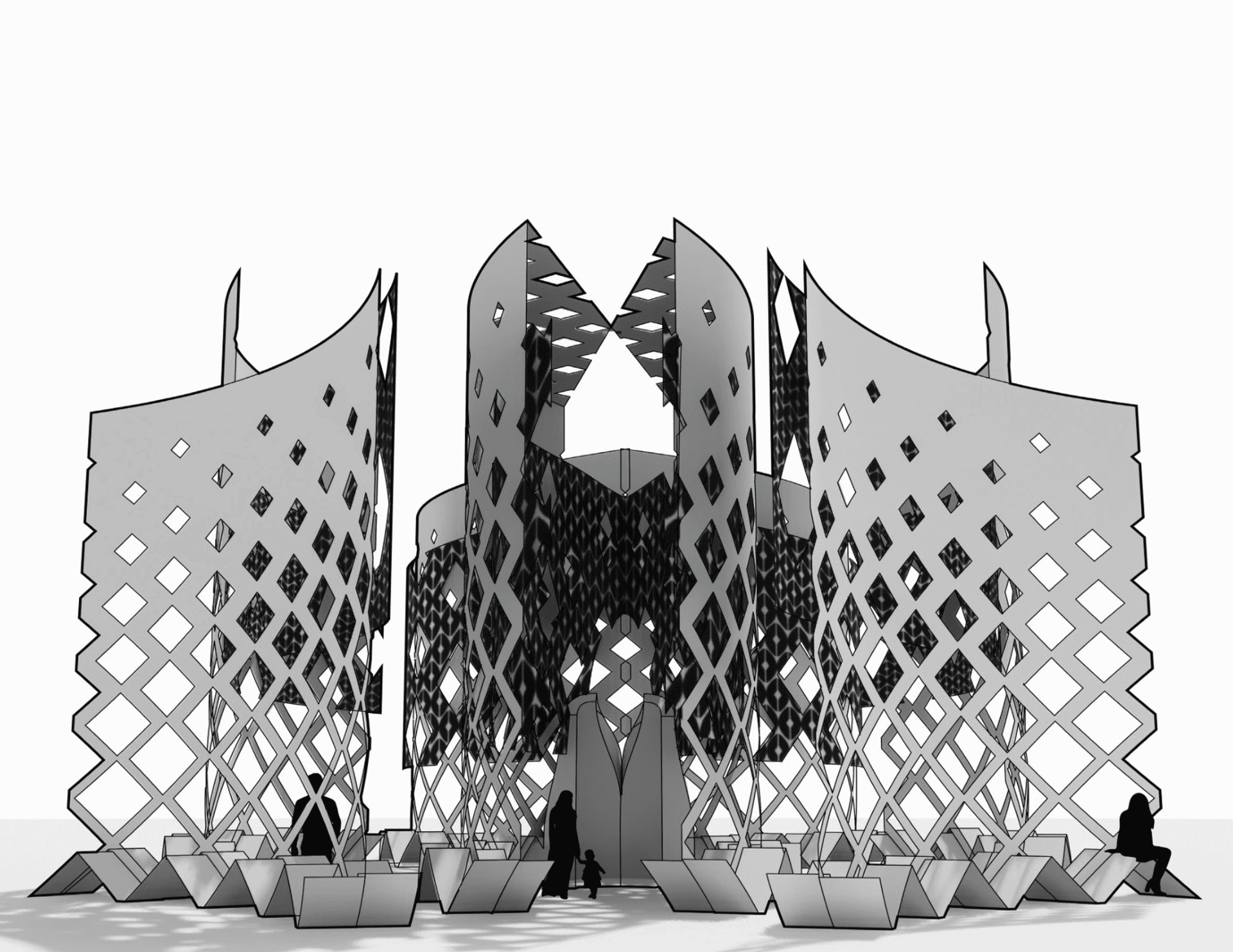
A thesis-level material inquiry repositioning the architectural façade as a temporal archive of weathering, erosion, and patina — sited along Seattle's post-industrial waterfront adjacent to Pier 62 and developed through accelerated material testing, modular facade casting, and hand-rendered environmental projections.
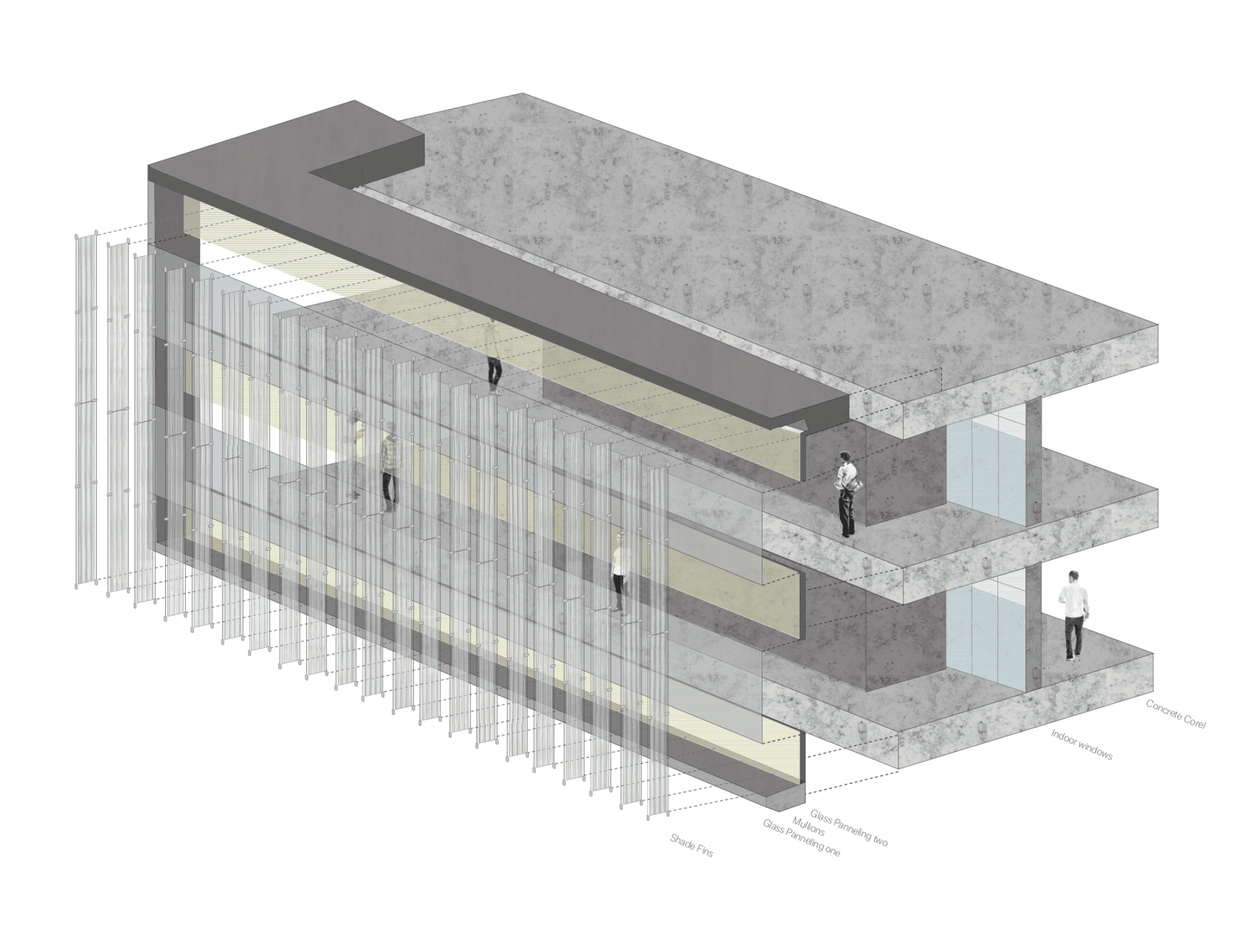
Exploded axonometric diagrams the full facade assembly — shade fins, mullions, double glass paneling, and concrete structural wall — with human figures occupying each level.
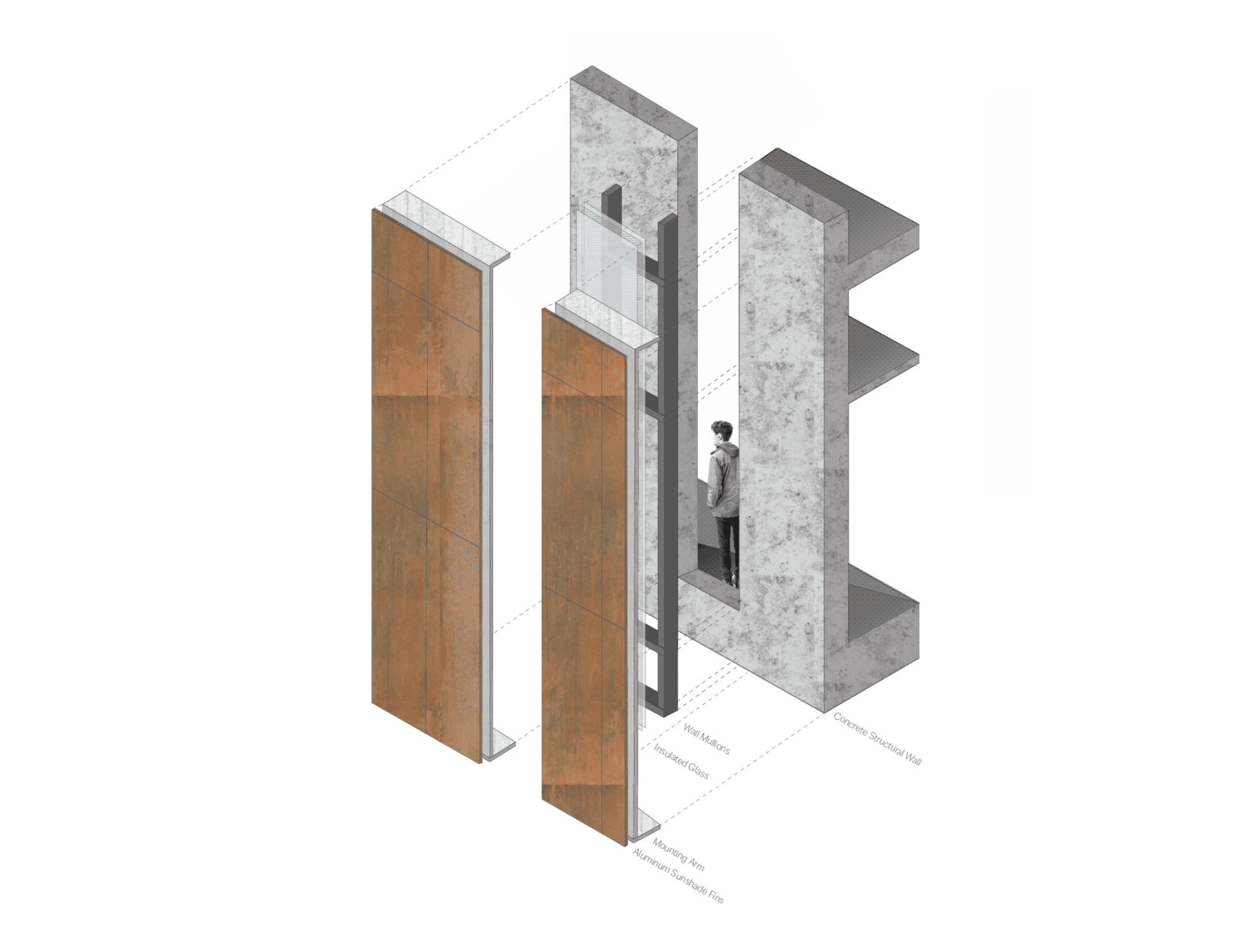
Wall section exploded axonometric isolates each facade layer — aluminum sunshade fins, mounting arm, insulated glass, wall mullions, and concrete structural wall — at human scale.
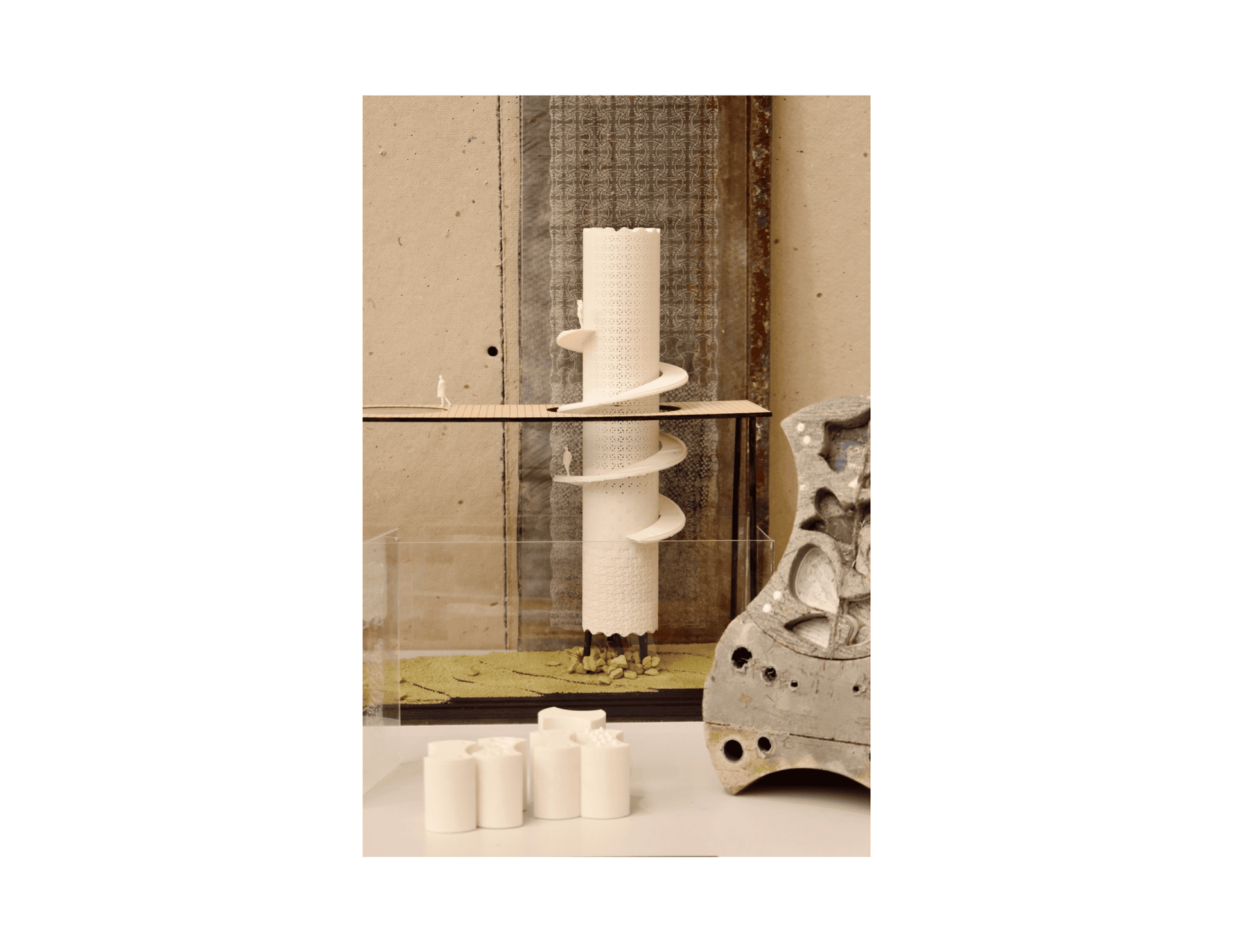
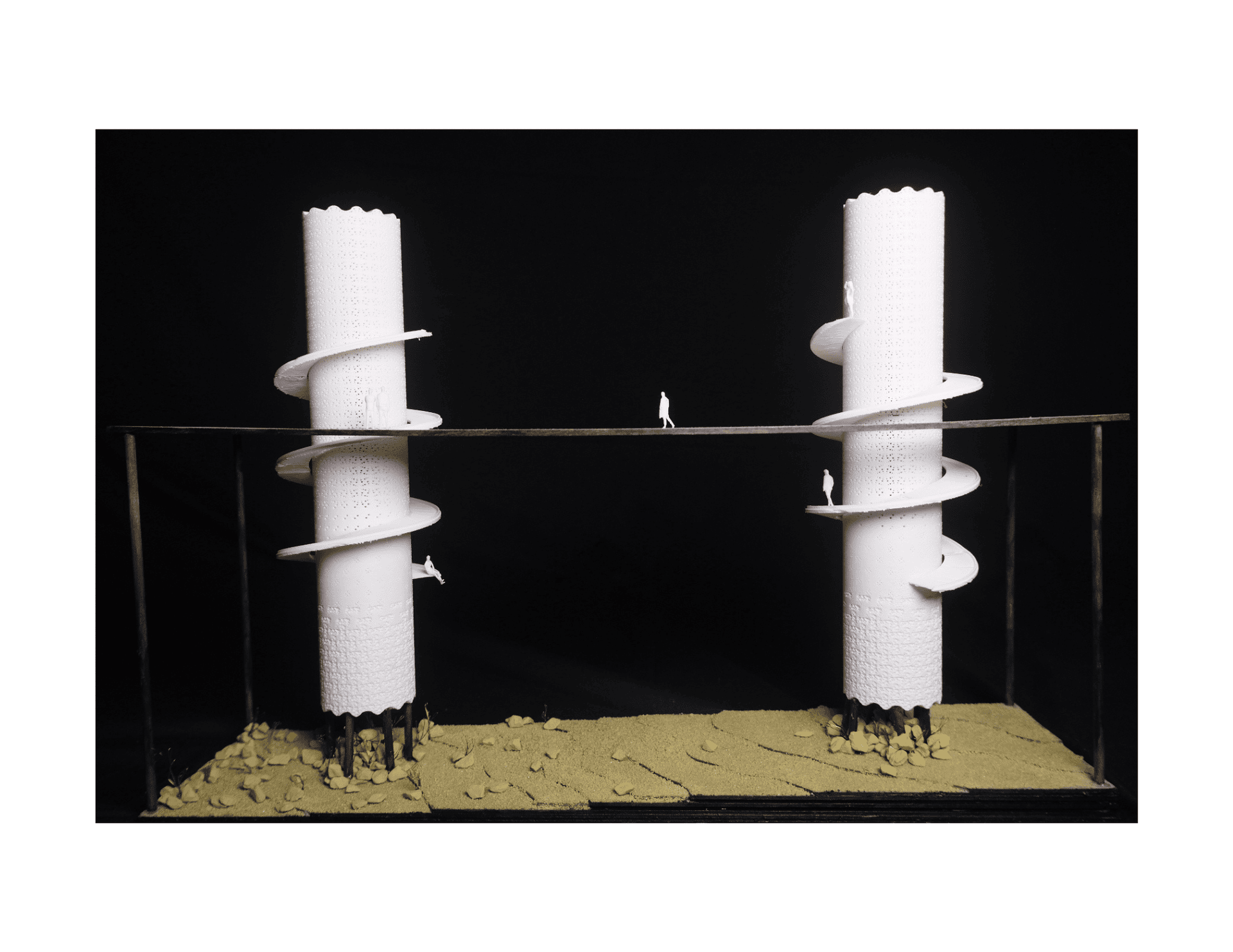
Physical model tableau groups the 3D-printed perforated tower, module prototypes, and concrete ecology cast against rusted metal and etched acrylic backdrop panels.
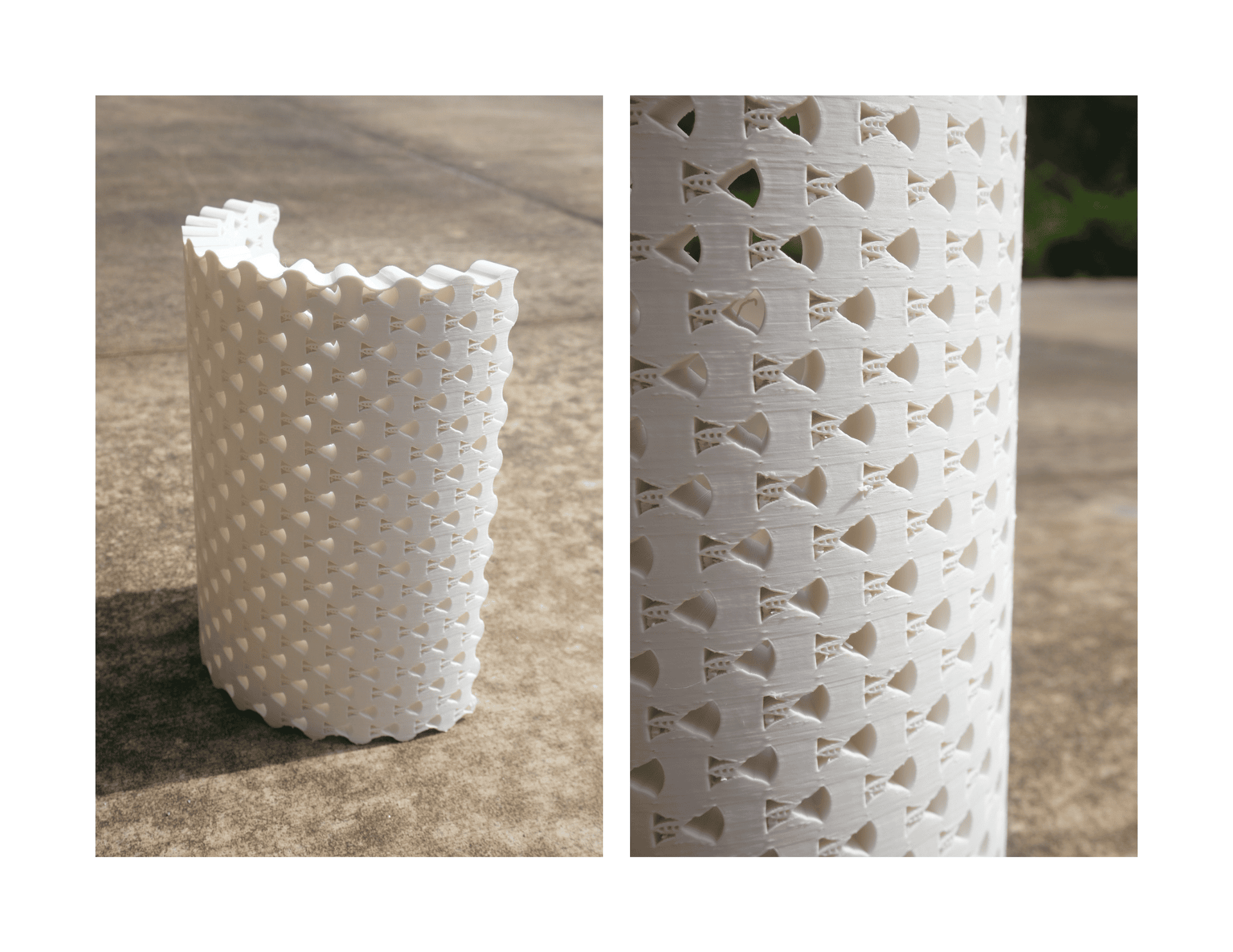
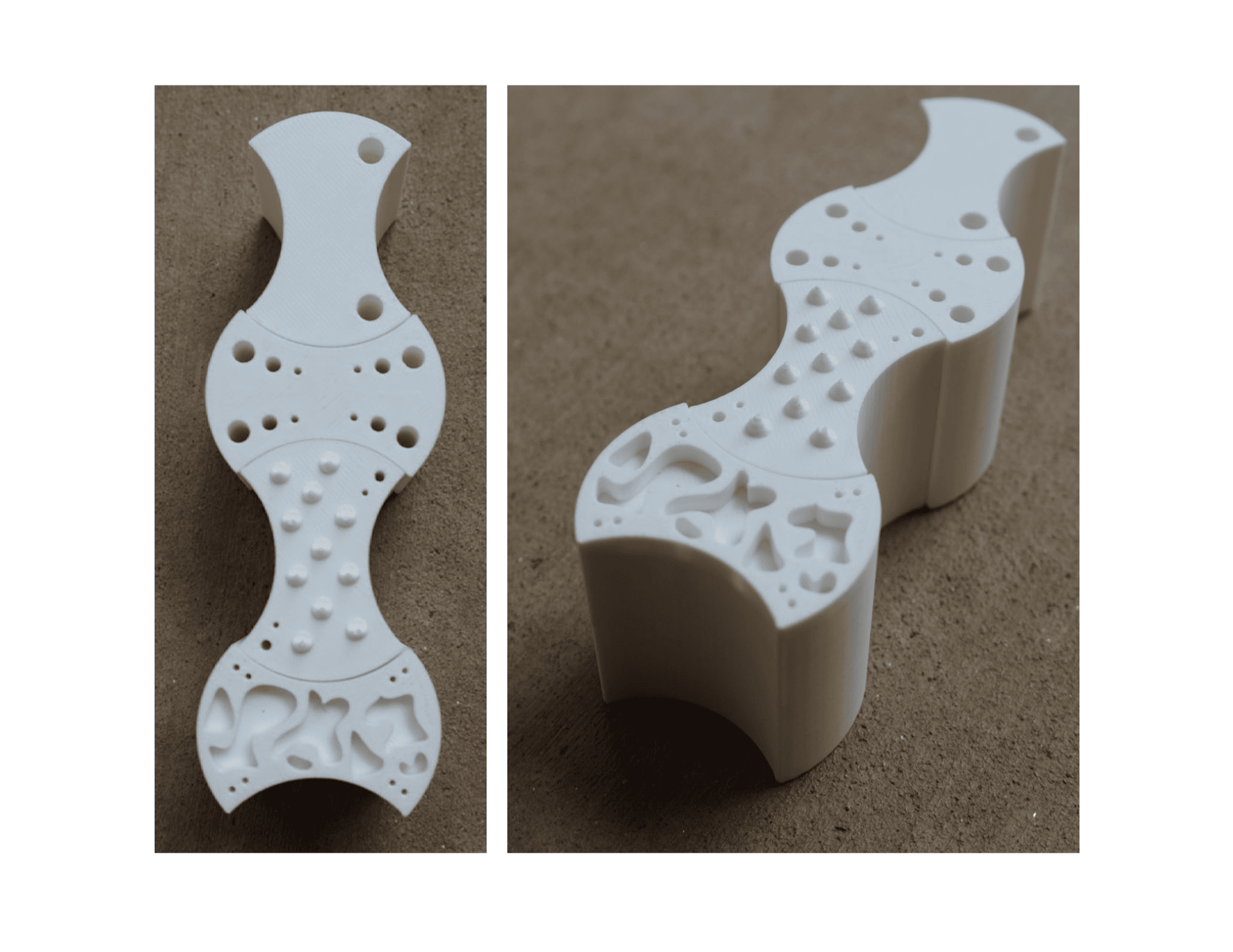
Two-photo close study of the 3D-printed perforated tower module — full form on the left, zoomed surface texture on the right revealing the interlocking triangular perforation pattern at detail scale.
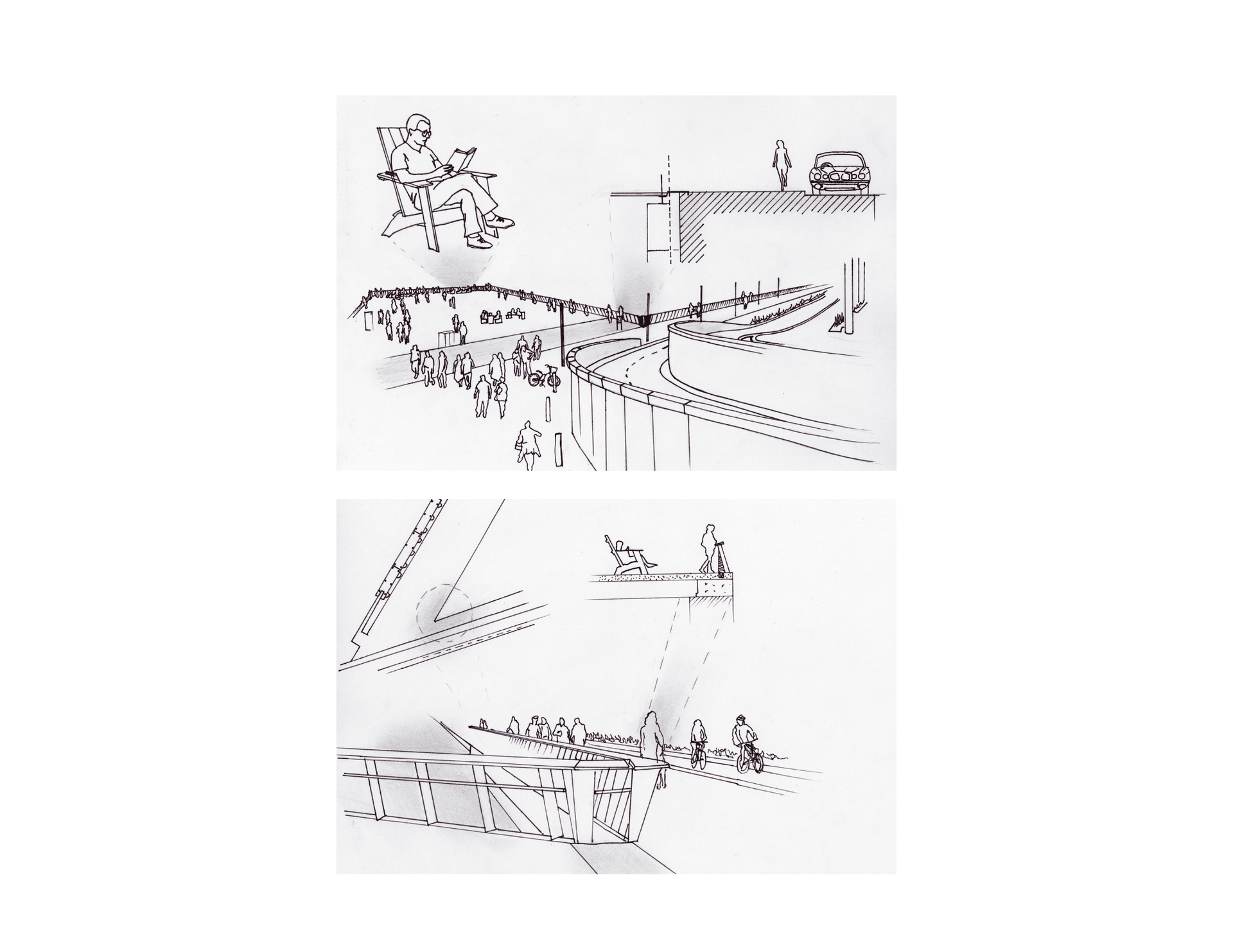
Two hand-drawn perspectives imagine public occupation of the elevated waterfront structure — figures reading, cycling, and gathering across cantilevered walkways above tidal water.
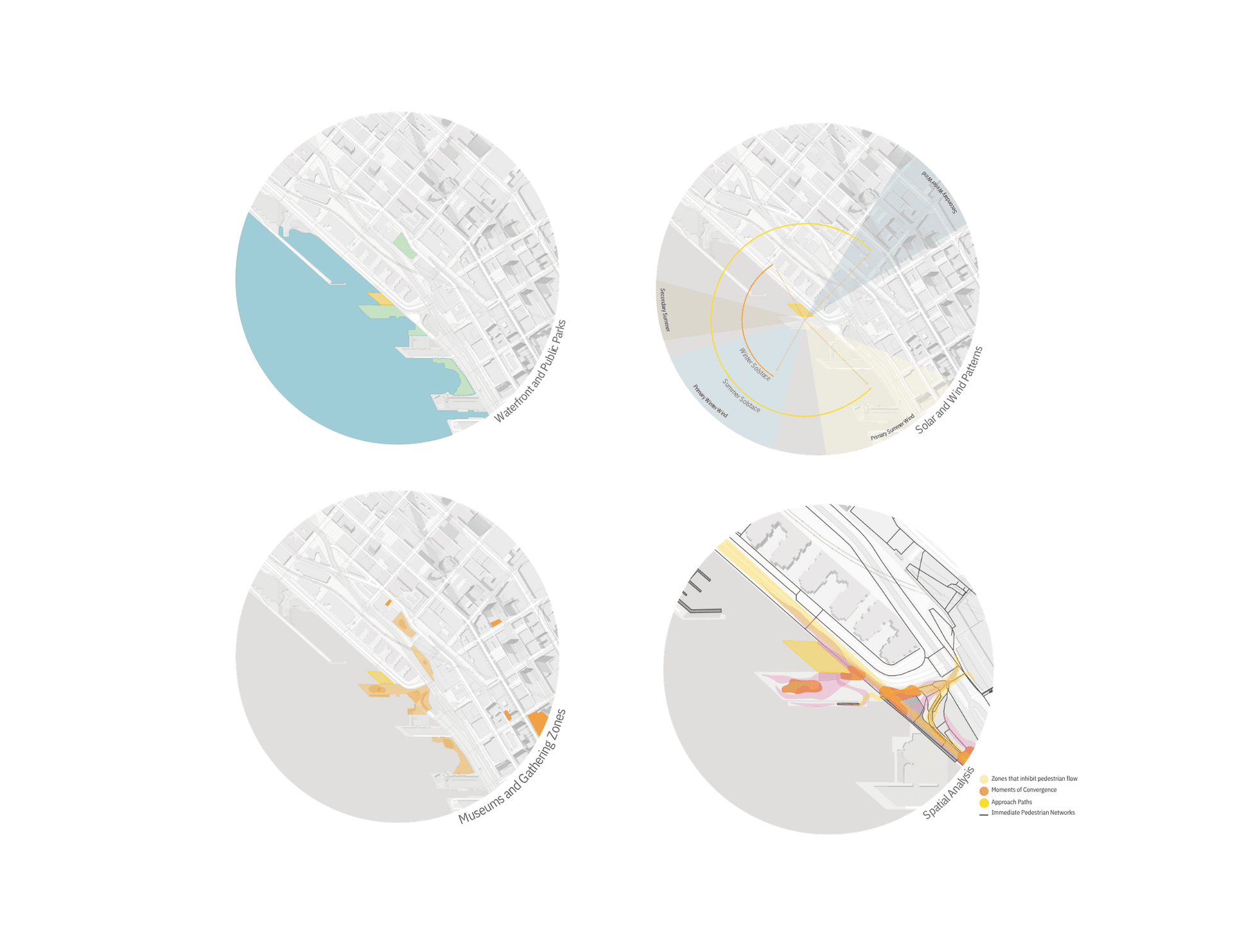
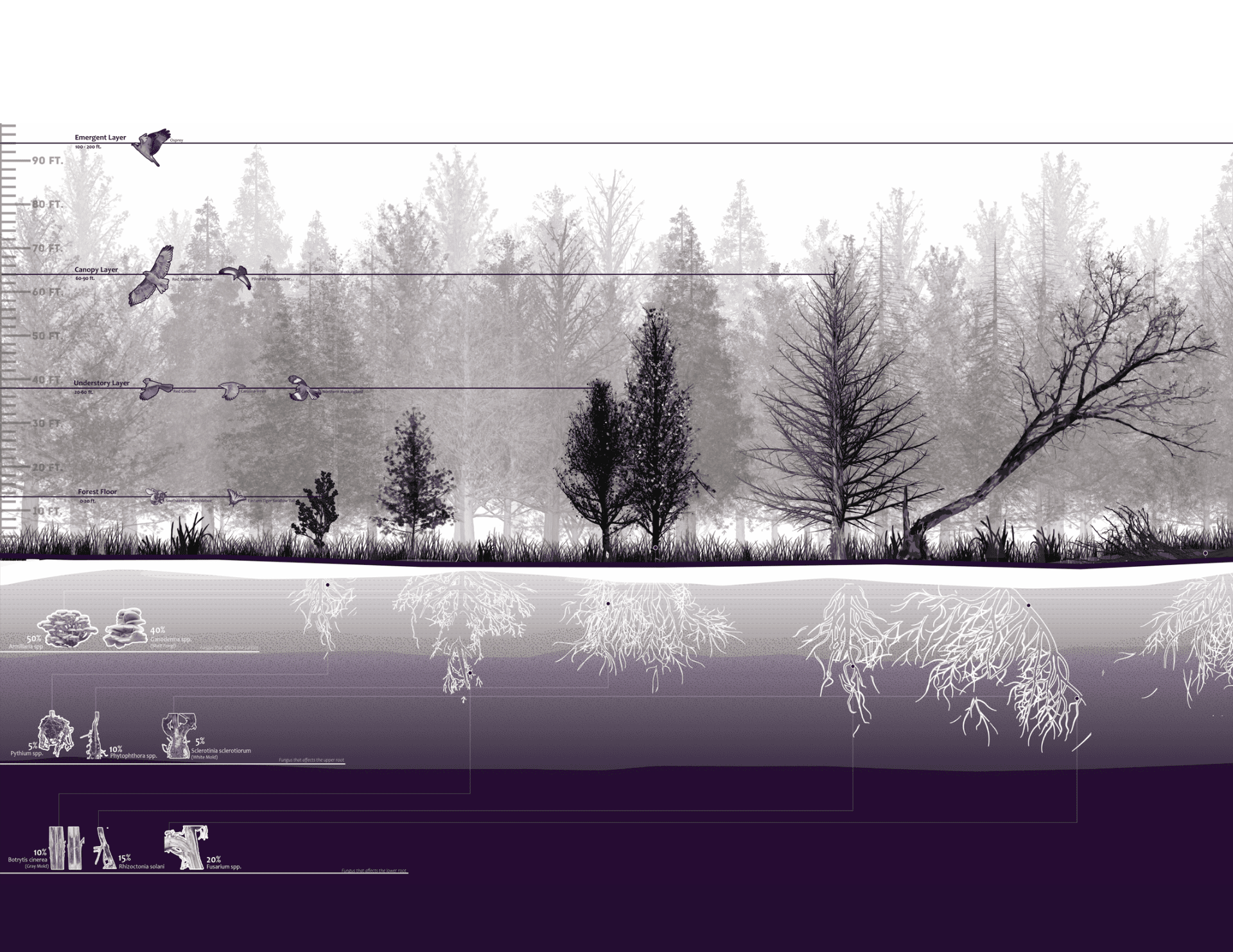
Four circular site analysis diagrams map Seattle's Central Waterfront — waterfront parks, solar and wind patterns, museum gathering zones, and pedestrian spatial analysis around Pier 62.
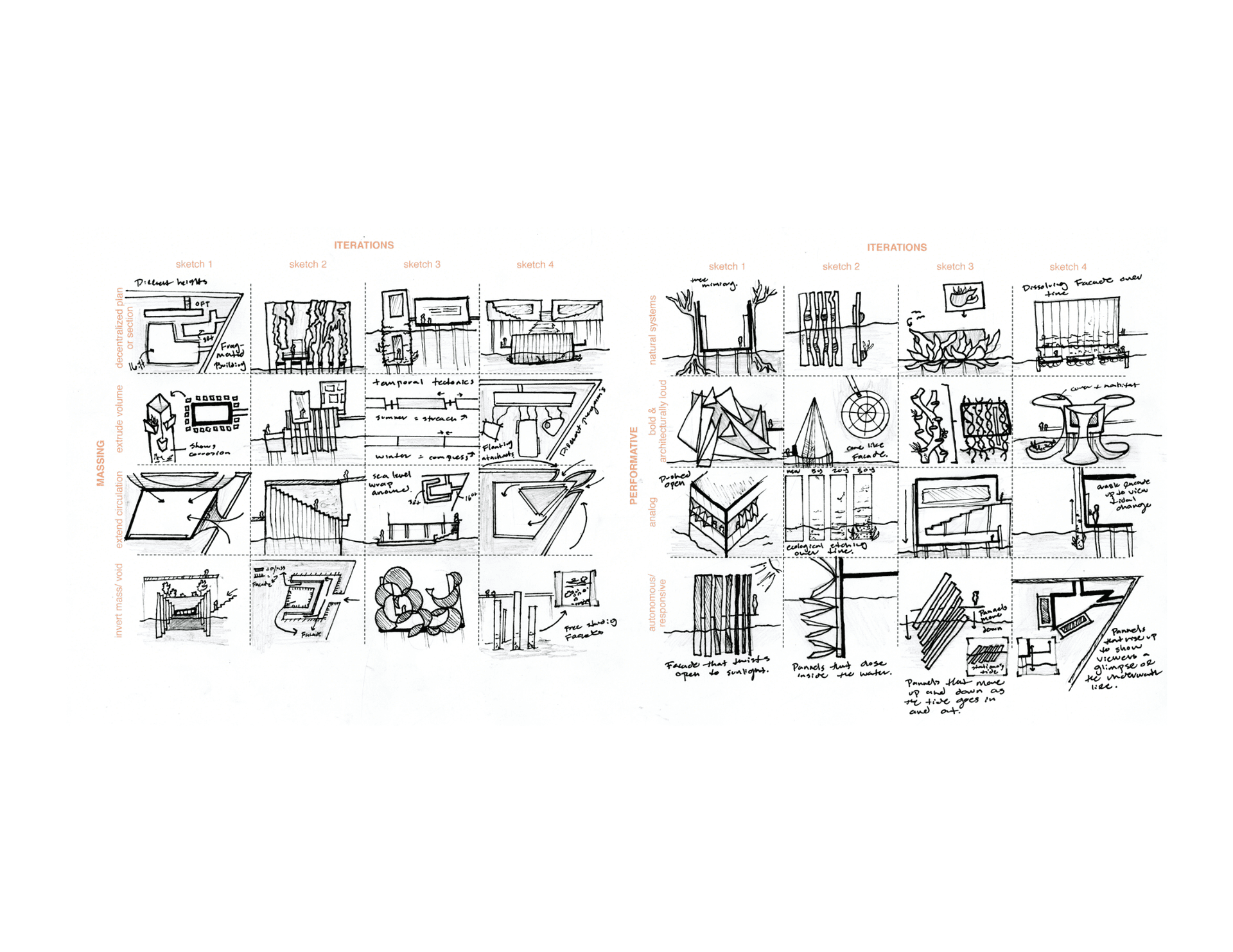
Two parallel iteration grids develop massing and performative strategies — each column tracks four sketch iterations across axes of decentralization, extrusion, circulation, natural systems, and autonomous response.
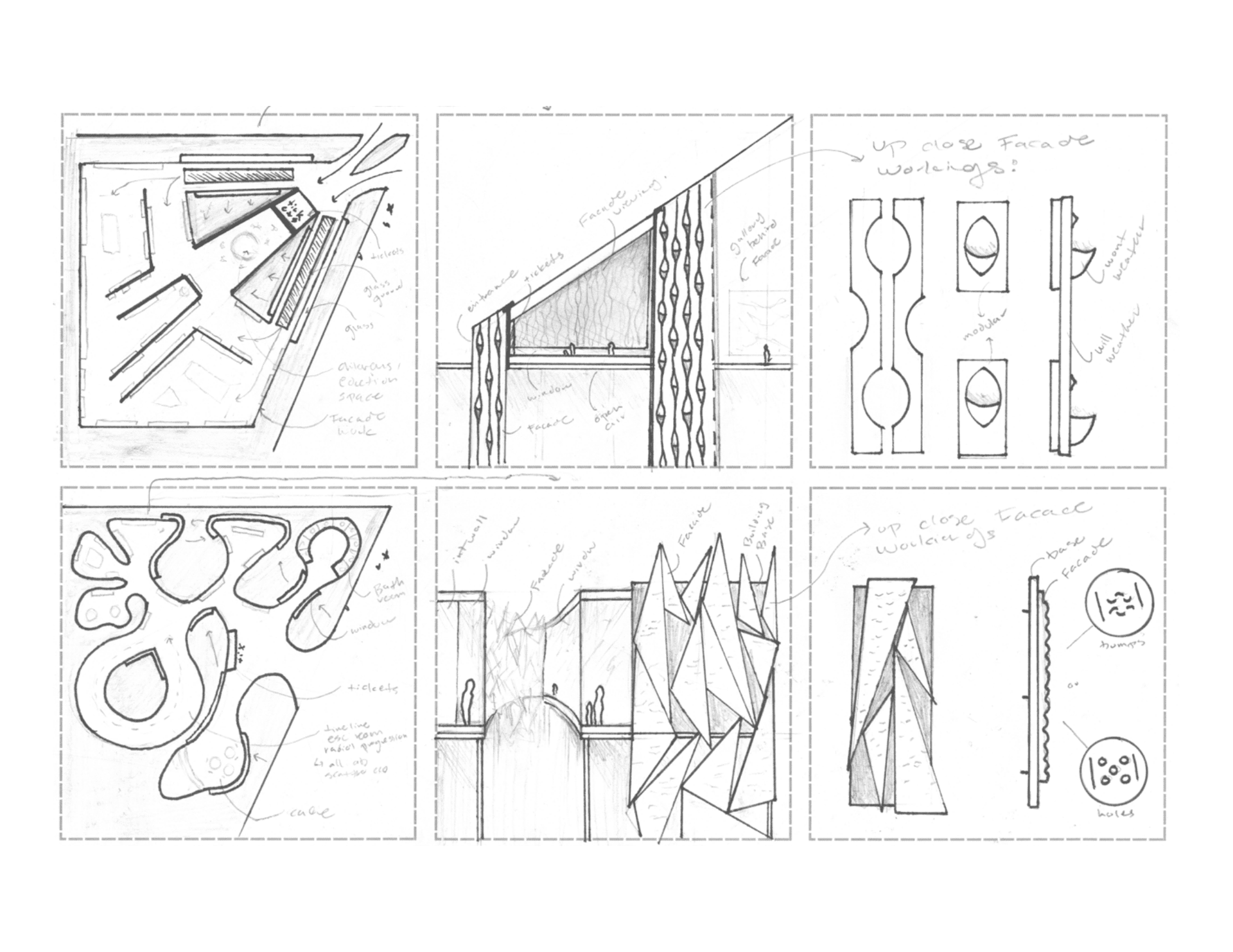
Six annotated sketch studies develop plan configurations, facade section details, close-up module workings, and surface porosity strategies across two rows of iterative drawings.
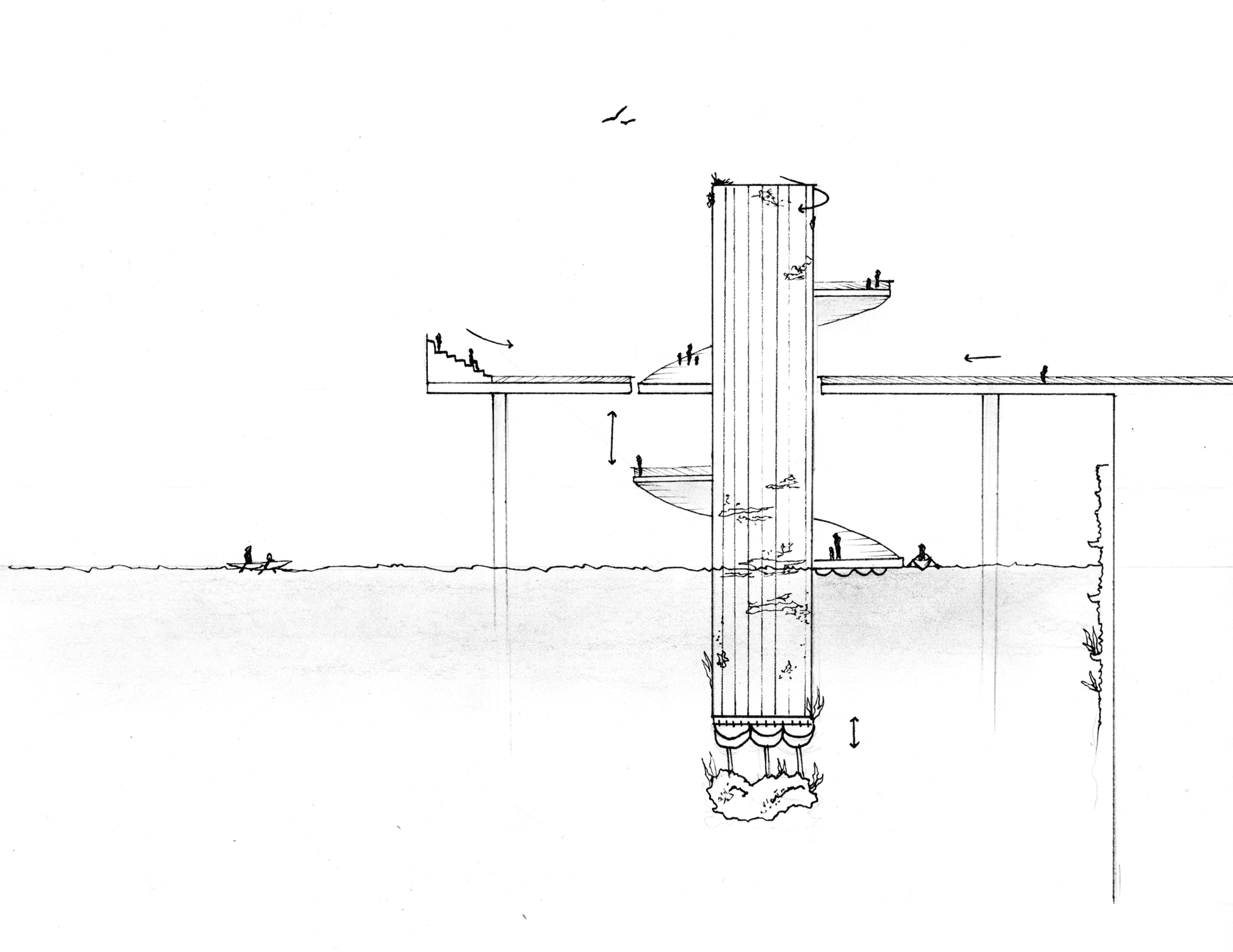
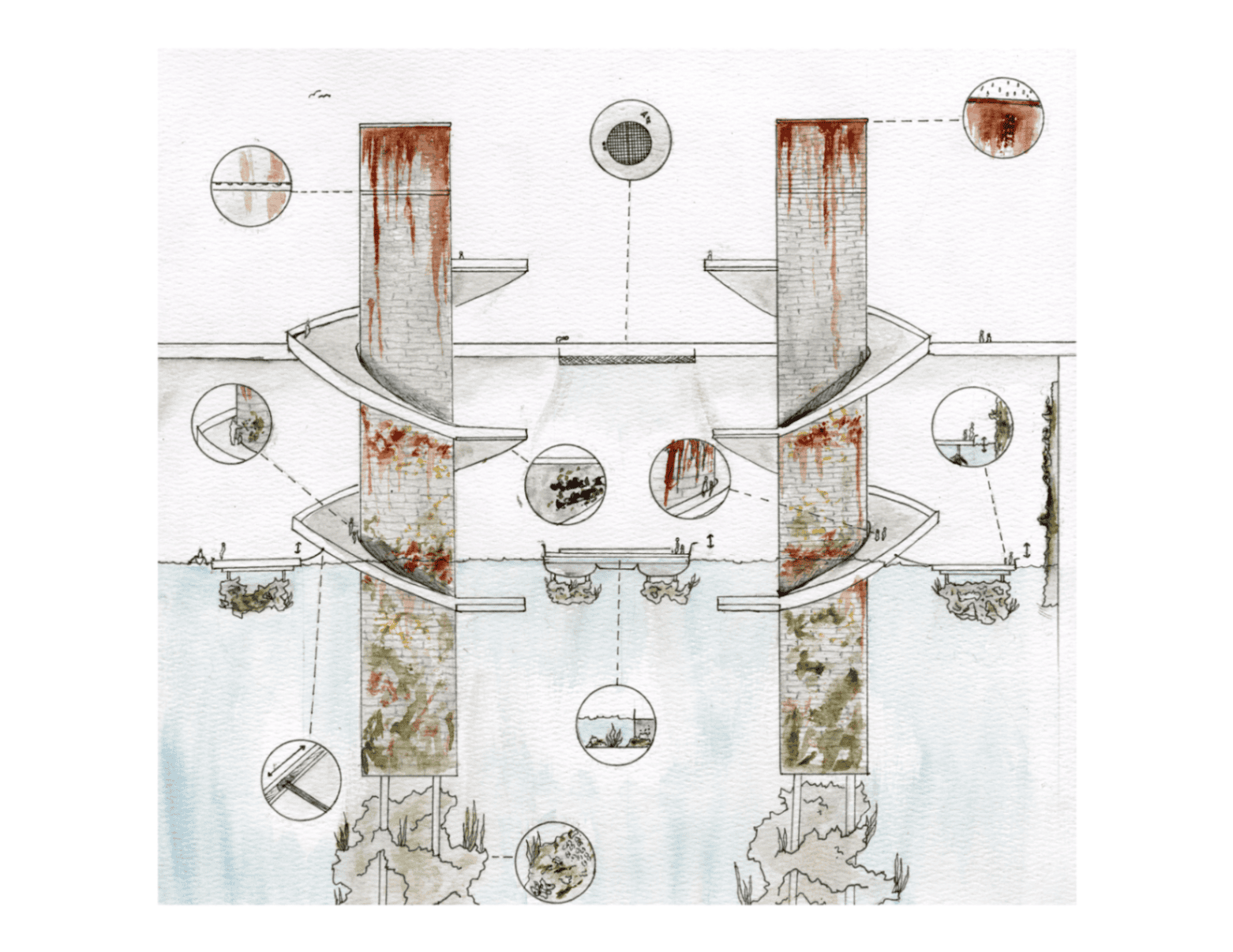
Hand-drawn section through the full tower system shows spiral ramp circulation, elevated walkways, tidal waterline, subaquatic ecology, and human figures occupying every vertical zone.
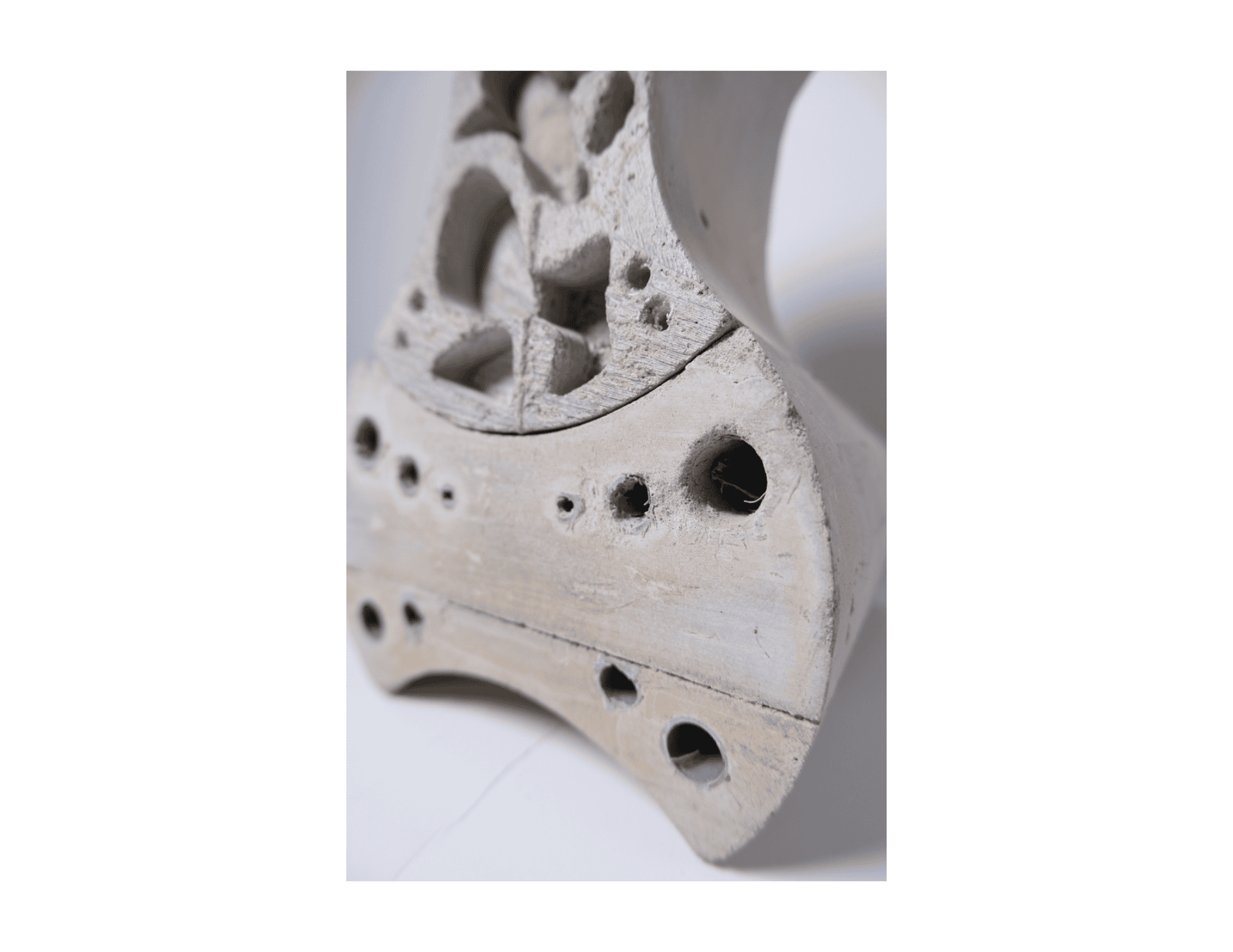
Angled close-up of the concrete ecology module base reveals embedded voids, circular perforations, and raw aggregate texture capturing the casting process and surface irregularities at detail scale.
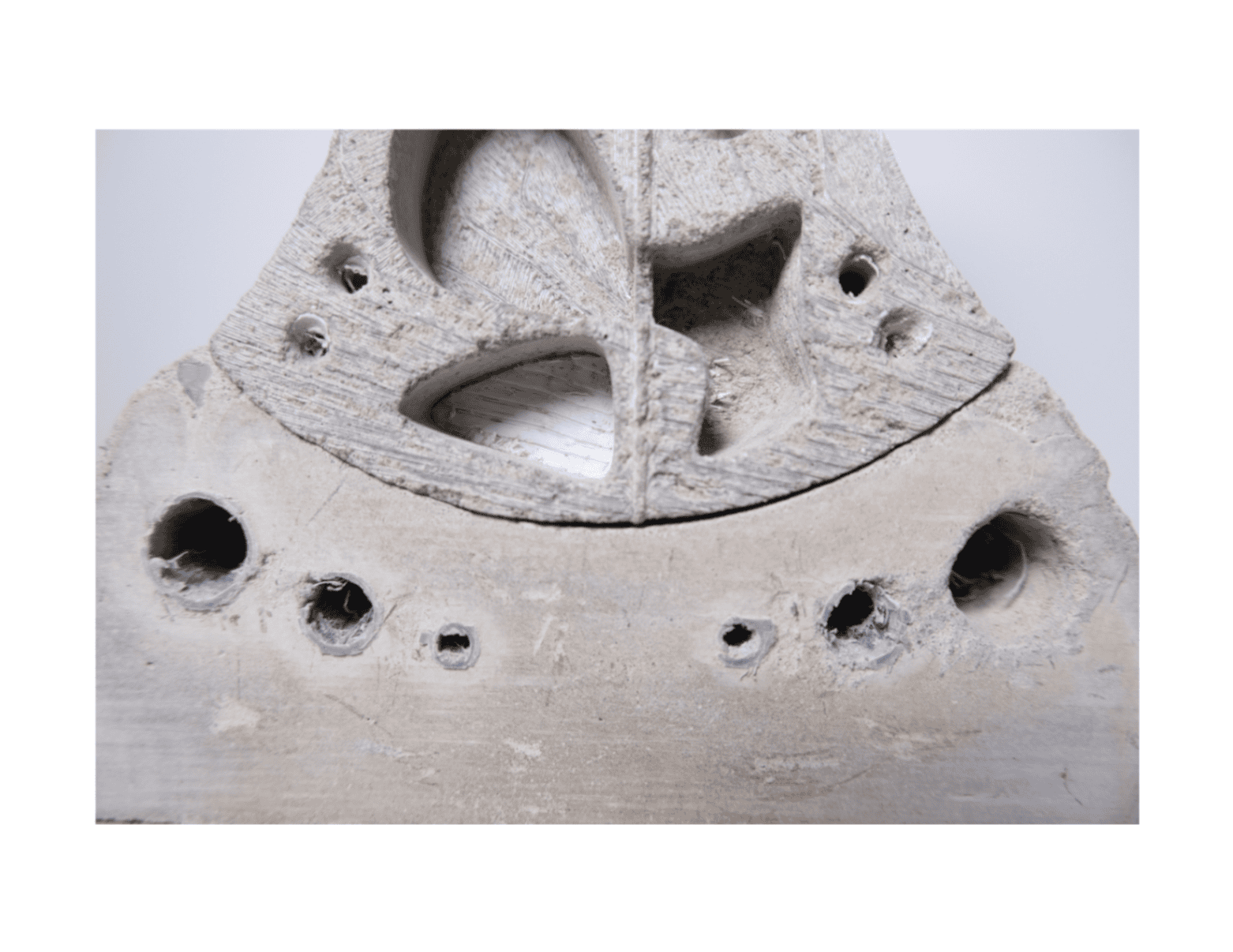
Front-on view of the concrete ecology module top section shows organic void clusters, layered surface scoring, and the transition between dense and porous zones across the cast face.
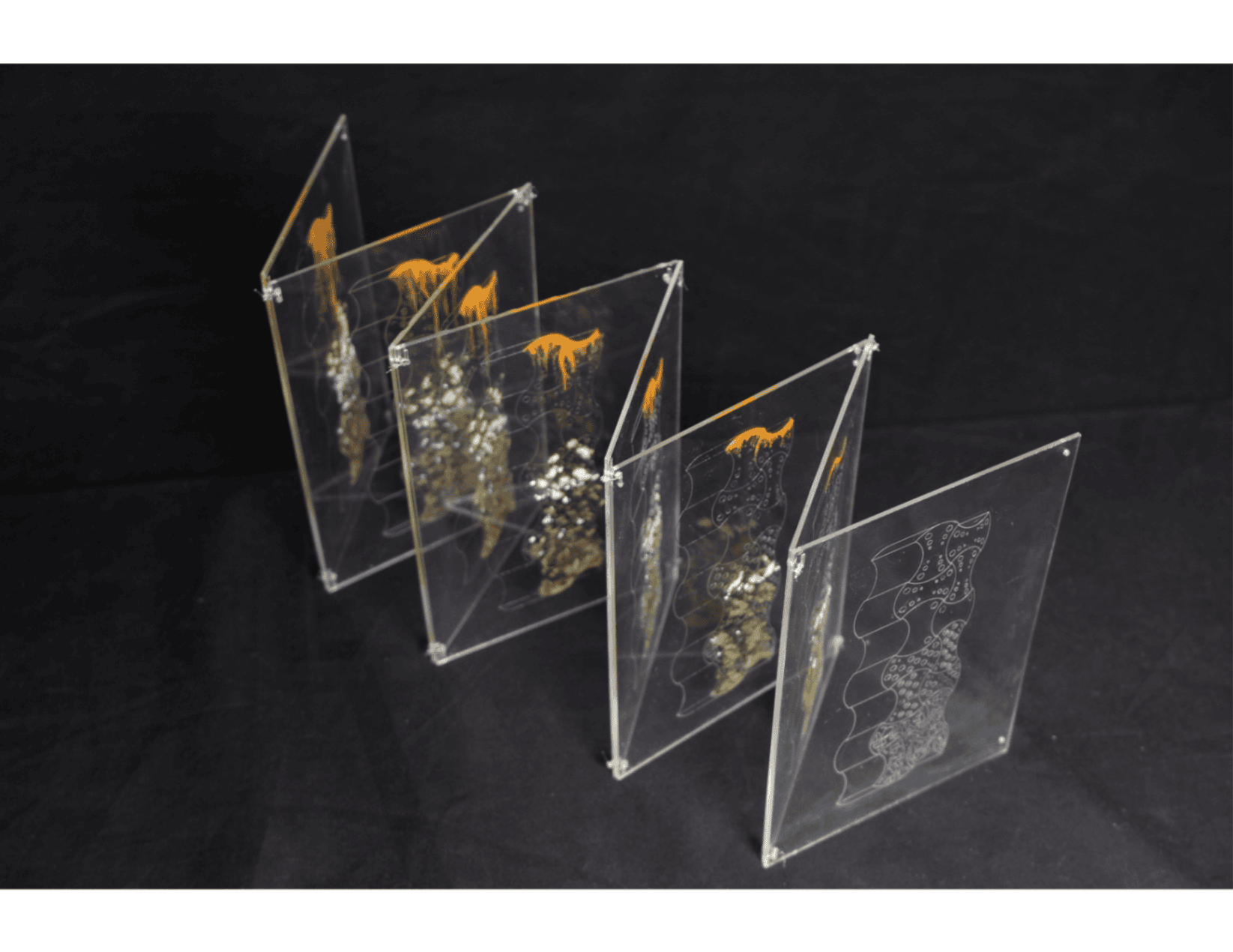
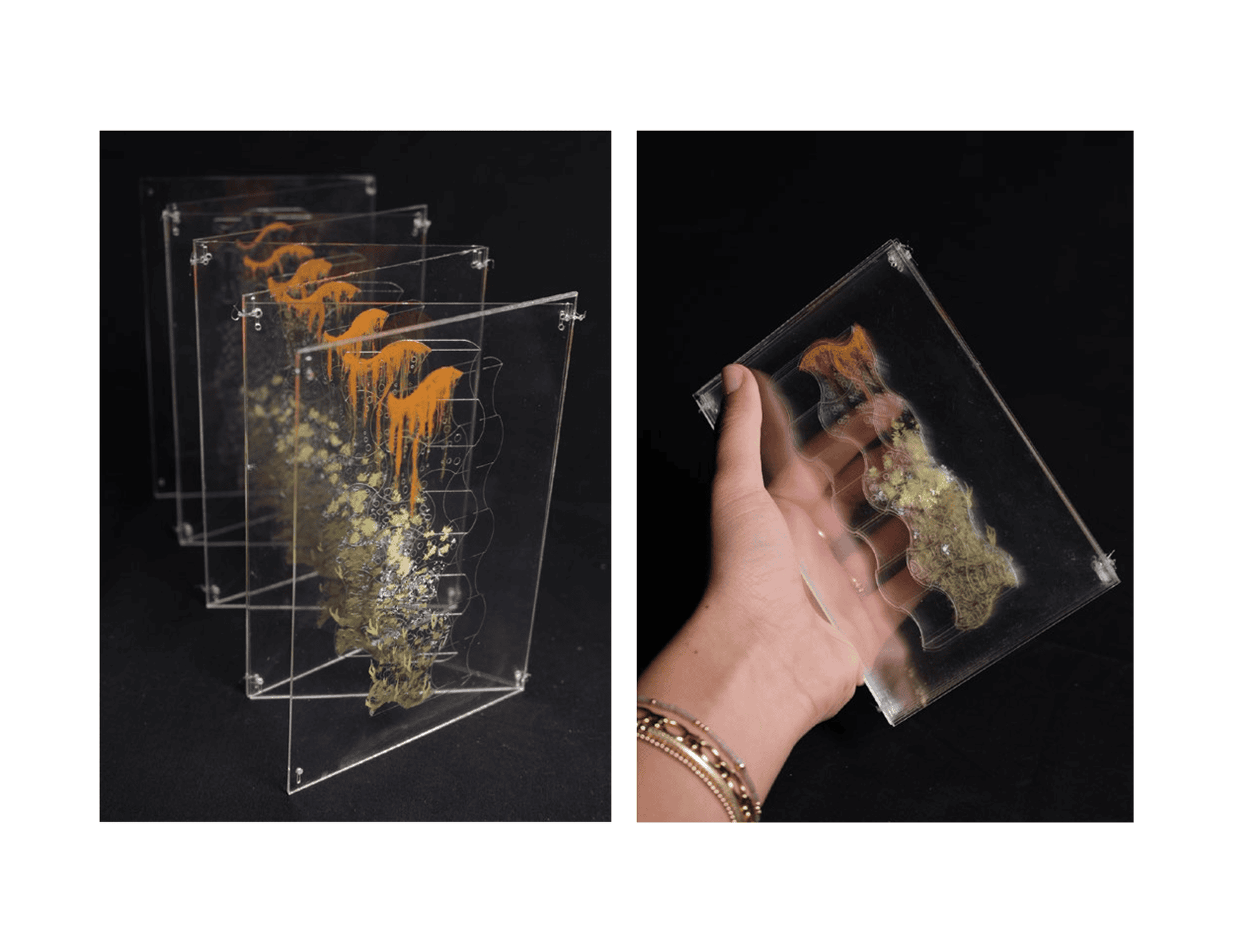
Four hinged acrylic panels stand upright against a black background — each etched with modular facade linework and painted with orange rust and yellow-green ecological buildup, layering time across transparent surfaces.
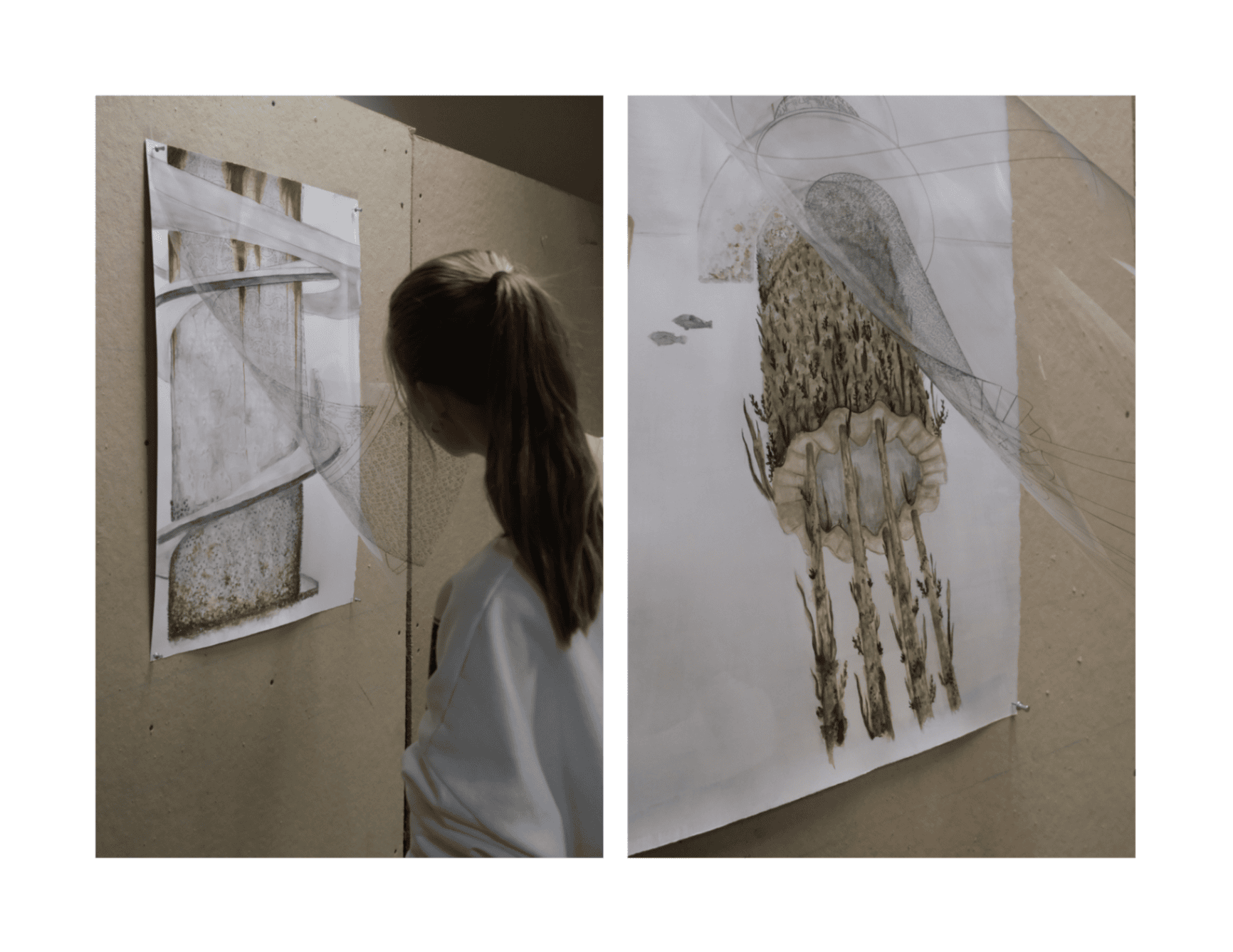
Two-photo studio view shows Annie reviewing final watercolor and vellum renderings pinned to the wall — one depicting rust streaking down the upper tower, the other showing subaquatic ecological growth colonizing the lower structure.
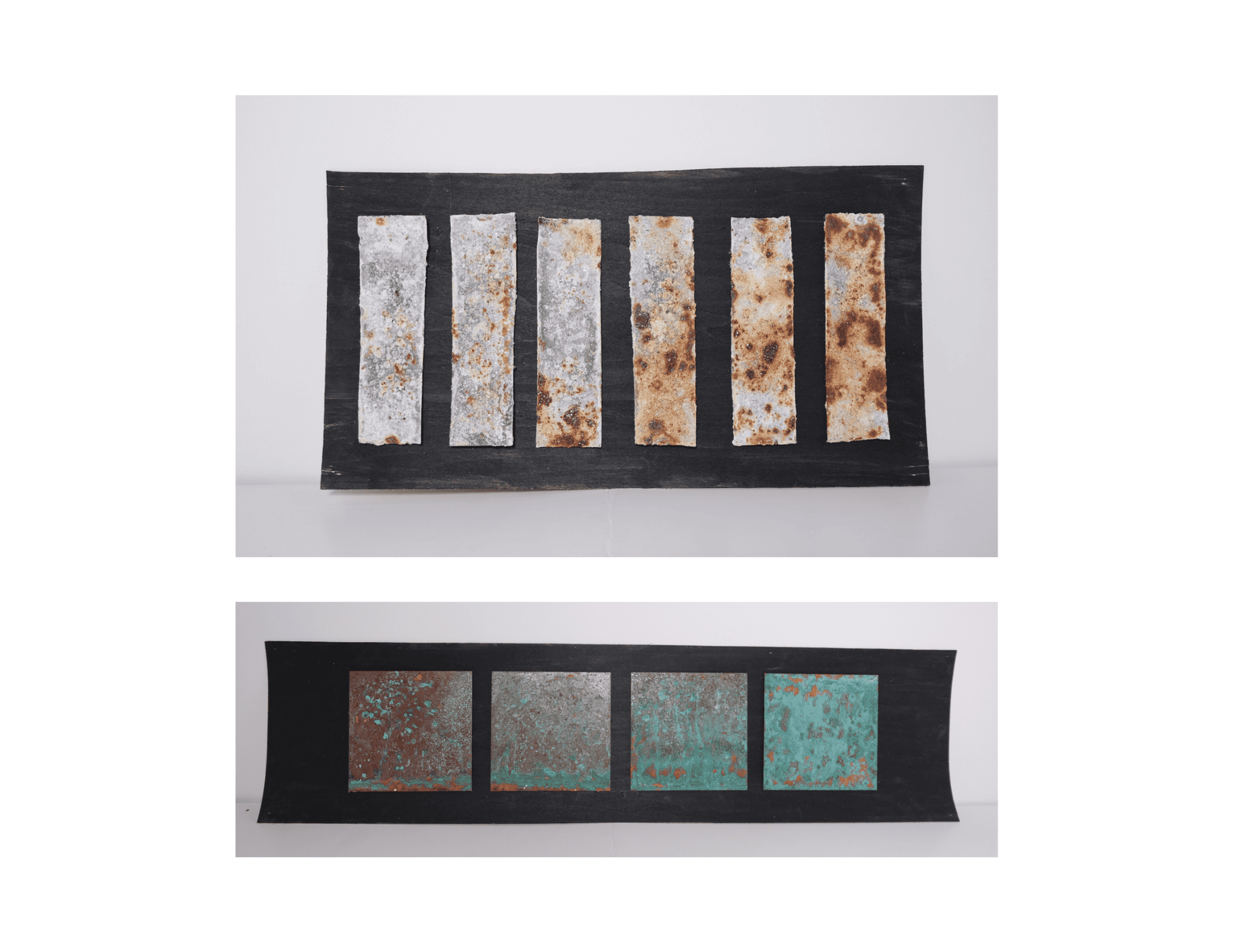
Two accelerated weathering specimen boards display a time gradient of oxidation — six steel strips progressing from clean silver to deep rust above, four copper squares shifting from brown-red to saturated verdigris below.
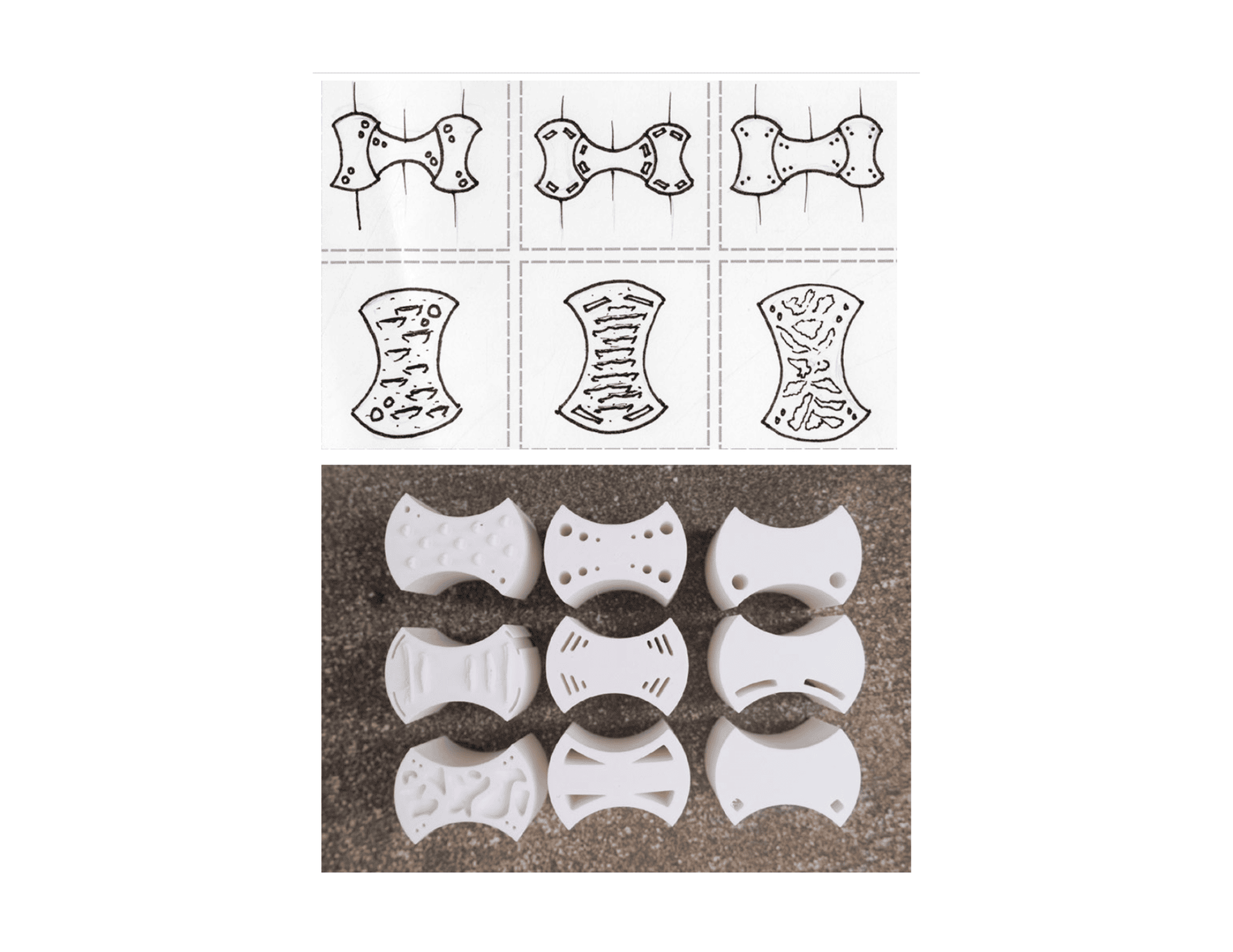
Six hand-sketched module studies in two rows explore surface articulation variations — holes, slashes, and organic crack patterns — paired below with nine 3D-printed white module prototypes testing each surface logic at scale.
Two-photo study of the final 3D-printed aperture and ecology modules — flat plan view on the left shows layered perforation zones, angled view on the right reveals depth, surface texture, and interlocking curved profile at scale.
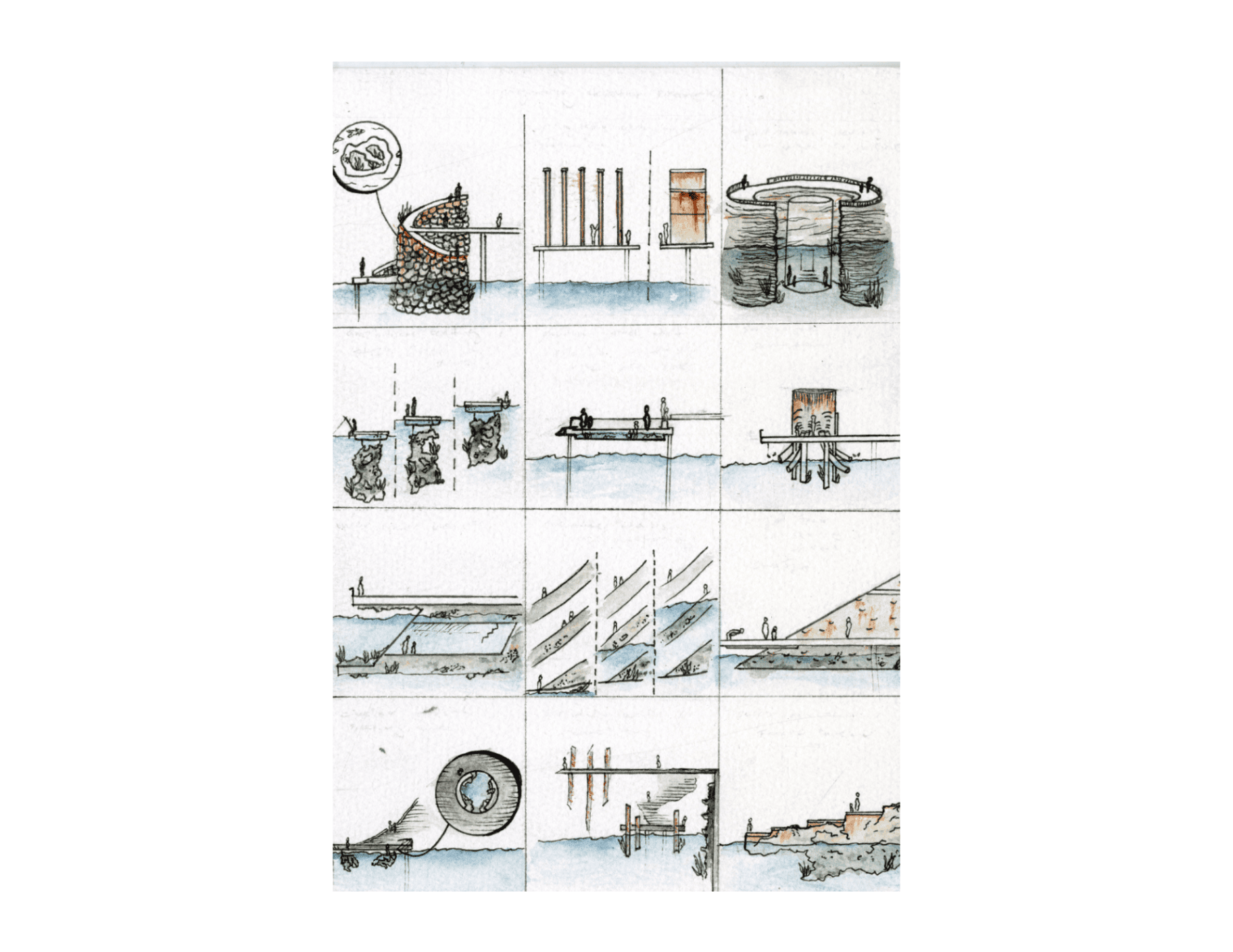
Twelve watercolor section sketches arranged in a 4×3 grid test tidal structure typologies — rock-encrusted towers, rusted steel columns, intertidal walkways, submerged platforms, and cantilevered observation decks above waterline.
Final hand-painted watercolor and plotted vellum section rendering shows both towers spanning tidal waterline — rust streaks above, dense ecological growth below — with annotated material detail circles calling out surface behavior at each zone.
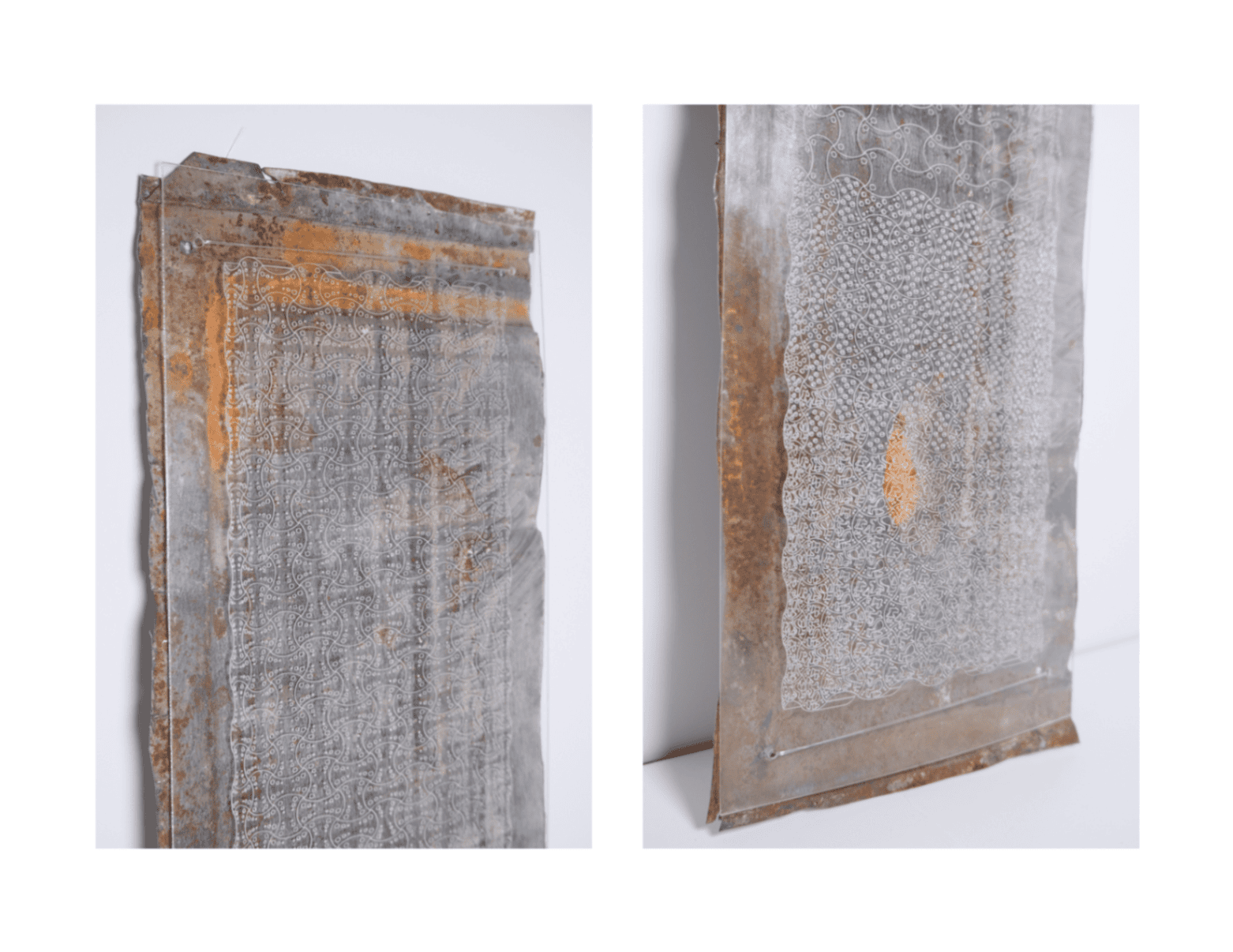
Two close-up photographs of the acrylic etching layered over rusted ceiling tile — precise modular linework sits over oxidized orange and grey patina, placing designed precision directly against entropy.
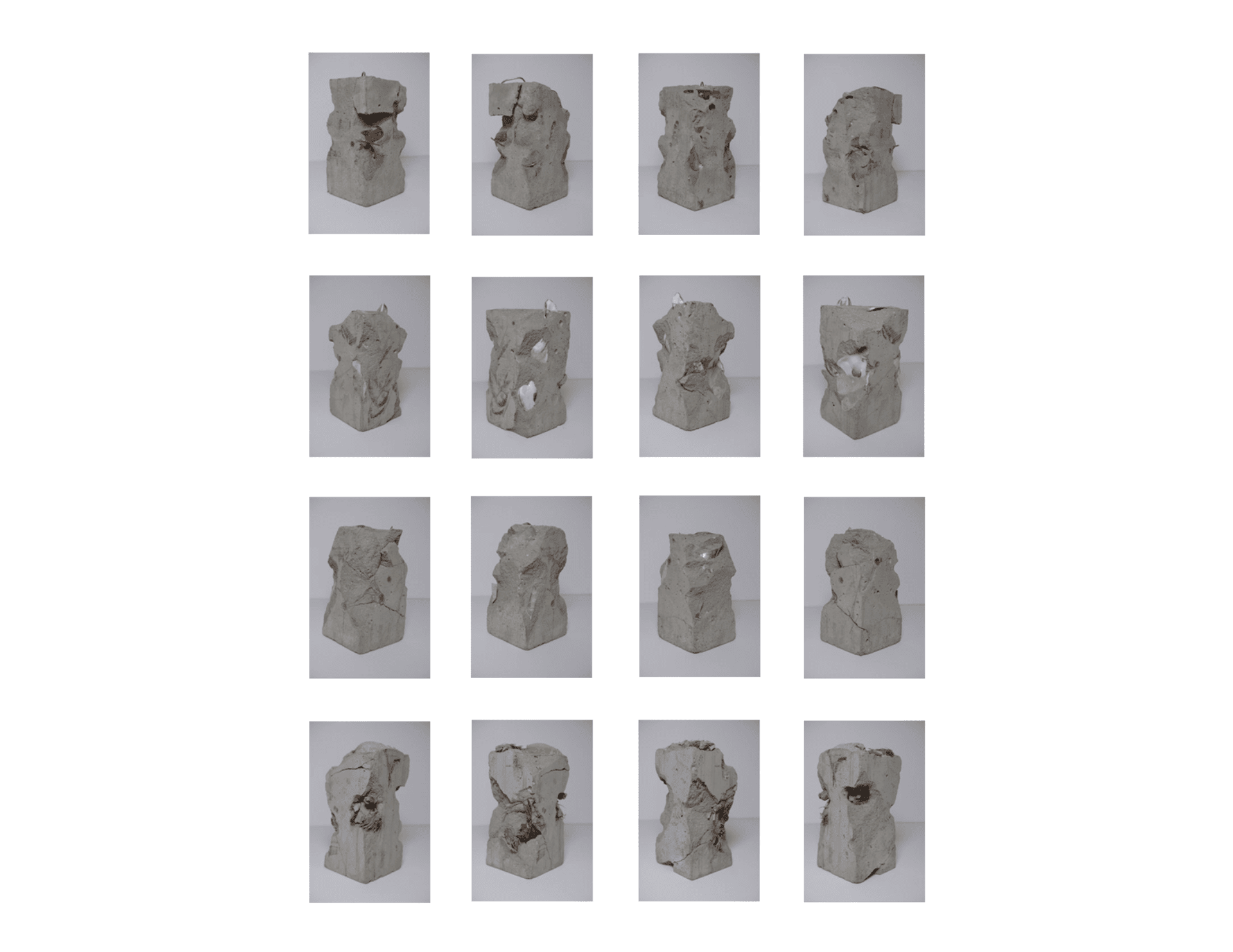
Sixteen concrete cast blocks arranged in a 4×4 grid document the full range of embedded material inclusions — copper, shells, metal strips, and wood — each chiseled open to reveal how organic and metallic inclusions bonded, fractured, and migrated within the cast matrix.
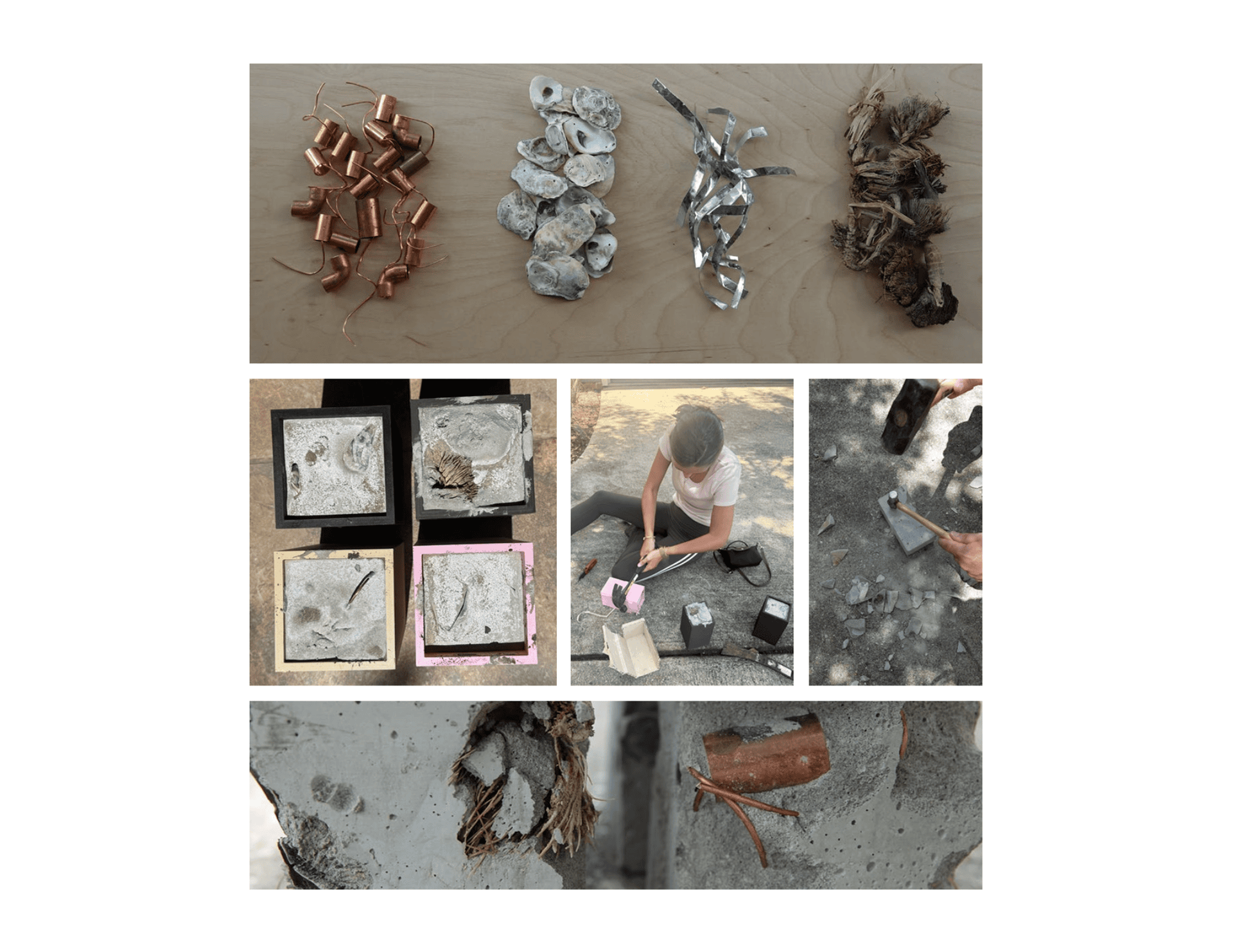
Six-photo composite documents the full concrete casting process — raw inclusions laid out (copper fittings, oyster shells, aluminum strips, dried plant matter), cast tiles in molds, Annie mixing on the ground, hammer breaking open casts, and two close details of fractured concrete revealing embedded materials.
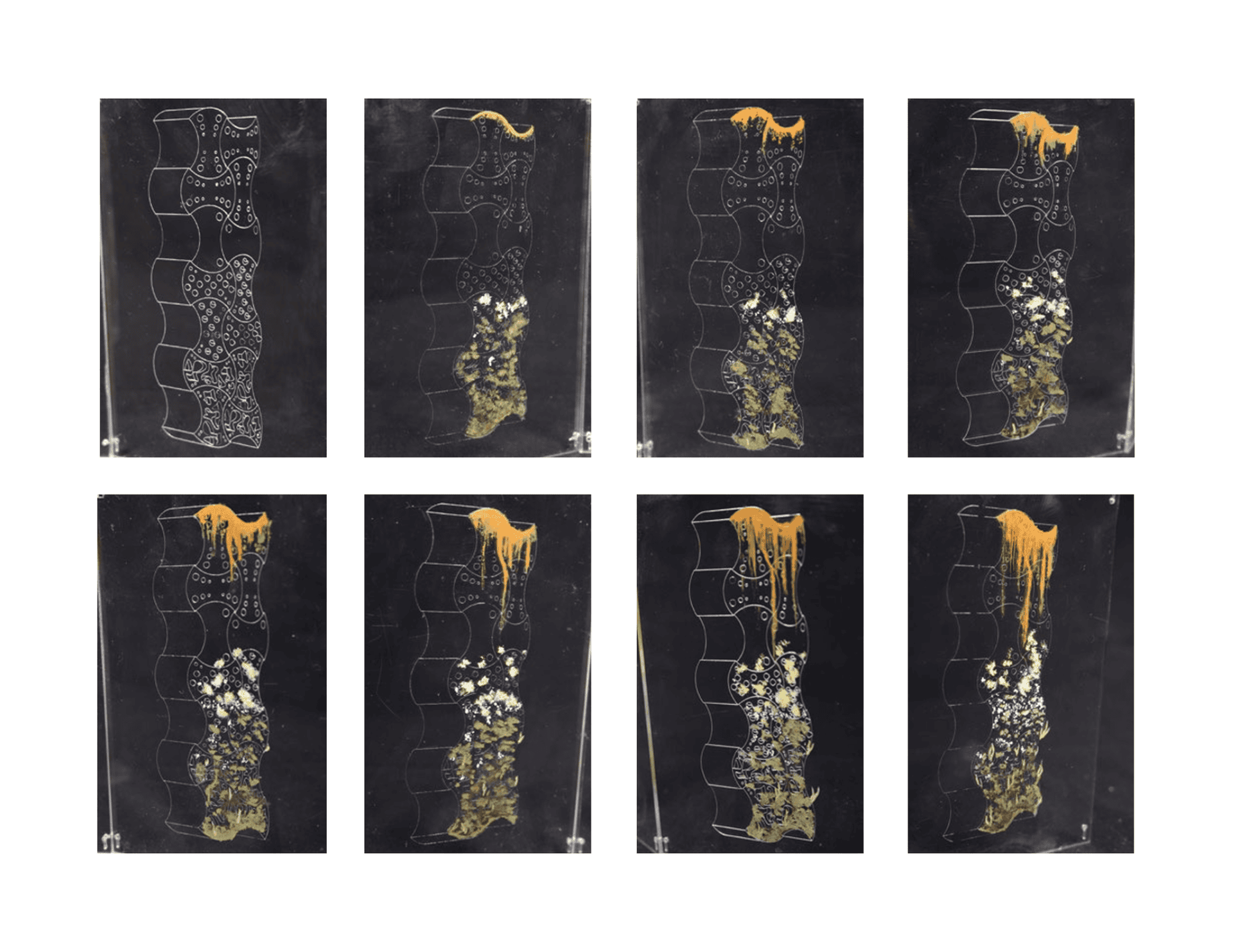
Eight acrylic etched panels arranged in two rows display a time gradient — beginning with a clean white module linework etching and progressing through increasing orange rust drip and yellow-green ecological buildup colonizing the facade surface.
Two-photo close study of the layered acrylic ecology assembly — left shows three panels fanned open with orange rust and green growth building across each layer, right shows a single panel held in hand against black background revealing translucency and depth of the painted ecological succession.

You may also like

Annie Neill

Explore Art WorksExplore Design WorksPortfolio + Resume